

Understanding menopause
Updated: Aug 31
#Menopause #MenopauseAwareness #WomensHealth #HealthyMenopause #HormonalHealth #MidlifeWellness #MenopauseSupport #WomenWellness #HotFlashes #Perimenopause #PostMenopause #VaginalHealth #PelvicHealth #HormoneHealth #HealthyAging #SelfCareForWomen #Gynecology #ObGyn #MumbaiGynecologist #Chembur #AnuragWomenHealthCare #WomensWellnessClinic #MenopauseCare #EmpowerWomen #HealthEducation #WellnessJourney #WomensHealthcare #HormoneBalance #AgingGracefully #FemaleHealthUnderstanding
Menopause: A Patient Education Guide
What Is Menopause?
Menopause is a natural stage in a woman’s life when menstrual periods permanently stop due to a decline in ovarian hormone production, mainly estrogen and
progesterone. It is diagnosed after 12 consecutive months without a menstrual period.
Most women experience menopause between the ages of 45–55 years, with the average age around 50 years.
Menopause is not a disease — it is a normal biological transition. However, hormonal changes can cause symptoms that affect physical, emotional, sexual, and metabolic health.
Stages of Menopause
1. Perimenopause
This is the transition phase before menopause.
During this stage:
Periods may become irregular
Flow may become heavier or lighter
Hormone levels fluctuate
Symptoms may begin
This phase can last for several months to a few years.
2. Menopause
Menopause is confirmed when:
A woman has had no menstrual periods for 12 months
The ovaries significantly reduce estrogen production.
3. Postmenopause
The years after menopause are called postmenopause.
Symptoms such as hot flashes may improve over time, but long-term health risks related to low estrogen can develop, including:
Bone loss (osteoporosis)
Heart disease
Vaginal dryness
Urinary symptoms
Common Symptoms of Menopause
Every woman experiences menopause differently. Some have mild symptoms, while others may have significant discomfort.
Physical Symptoms
Hot Flashes
Sudden feelings of heat, sweating, and flushing, especially over the face and chest.
Night Sweats
Hot flashes occurring during sleep, often disturbing rest.
Sleep Problems
Difficulty falling asleep or waking frequently at night.
Irregular Periods
Cycles may become unpredictable before stopping completely.
Weight Gain
Especially around the abdomen due to hormonal and metabolic changes.
Joint and Muscle Pain
Body aches and stiffness are common.
Fatigue
Low energy and tiredness may occur frequently.
Emotional and Mental Symptoms
Hormonal fluctuations can affect mood and mental wellbeing.
Women may experience:
Mood swings
Irritability
Anxiety
Low mood
Difficulty concentrating
Brain fog
Reduced confidence
If symptoms are severe or persistent, medical evaluation is important.
Vaginal and Sexual Health Changes
Reduced estrogen affects vaginal and urinary tissues.
Common symptoms include:
Vaginal dryness
Burning or irritation
Pain during intercourse
Reduced sexual desire
Recurrent urinary infections
Urinary urgency or leakage
These symptoms are very common and treatable.
Long-Term Health Effects of Menopause
Bone Health
Lower estrogen increases the risk of osteoporosis and fractures.
Prevention:
Calcium-rich diet
Vitamin D
Weight-bearing exercise
Bone density screening when advised
Heart Health
After menopause, the risk of high blood pressure, cholesterol problems, and heart disease increases.
Prevention:
Healthy diet
Regular exercise
Weight management
Blood pressure and sugar control
Healthy Lifestyle During Menopause
Nutrition Tips
Eat a balanced diet rich in:
Protein
Calcium
Fruits and vegetables
Whole grains
Healthy fats
Reduce:
Excess sugar
Processed food
Smoking
Excess alcohol
Excess caffeine if hot flashes worsen
Exercise
Regular physical activity helps:
Control weight
Improve mood
Strengthen bones
Improve sleep
Reduce stress
Recommended:
Walking
Yoga
Strength training
Pelvic floor exercises
Stretching
Aim for at least 30 minutes most days of the week.
Sleep Hygiene
To improve sleep:
Maintain a regular sleep schedule
Avoid screens before bedtime
Keep the room cool
Limit caffeine late in the day
Treatment Options for Menopause
Treatment depends on symptoms, health history, and patient preference.
1. Lifestyle Management
Mild symptoms may improve with:
Diet
Exercise
Stress reduction
Sleep optimization
2. Hormone Replacement Therapy (HRT / MHT)
Menopausal Hormone Therapy replaces declining estrogen levels.
It may help:
Hot flashes
Night sweats
Vaginal dryness
Sleep disturbance
Bone protection
Not every woman is suitable for hormone therapy. A detailed consultation and risk assessment are necessary.
3. Non-Hormonal Treatments
Some women may benefit from:
Non-hormonal medications
Vaginal moisturizers
Lubricants
Pelvic floor therapy
Counseling or mental health support
4. Vaginal Estrogen Therapy
Low-dose local estrogen may help:
Vaginal dryness
Burning
Painful intercourse
Urinary symptoms
It acts mainly locally with minimal systemic absorption.
When Should You See a Doctor?
Consult a gynecologist if you experience:
Very heavy bleeding
Bleeding after menopause
Severe hot flashes
Significant mood changes
Pain during intercourse
Urinary symptoms
Sleep disturbance affecting daily life
Concerns about bone or heart health
Early guidance can greatly improve quality of life.
Frequently Asked Questions (FAQ)
Is menopause painful?
Menopause itself is not painful, but symptoms like joint pains, headaches, and vaginal dryness may cause discomfort.
Can pregnancy occur during perimenopause?
Yes. Pregnancy is still possible until menopause is confirmed. Contraception may still be required.
Does every woman need hormone therapy?
No. Treatment is individualized based on symptoms and medical history.
Can menopause cause weight gain?
Hormonal changes and slower metabolism can contribute to weight gain, especially around the abdomen.
Is vaginal dryness treatable?
Yes. Lubricants, moisturizers, pelvic therapy, and vaginal estrogen treatments can help significantly.
Final Message
Menopause is a natural transition — not the end of health, femininity, or vitality. With proper awareness, lifestyle care, and medical guidance when needed, women can continue to lead healthy, active, and fulfilling lives.
Open conversations and timely medical support can make menopause a smoother and more comfortable journey.
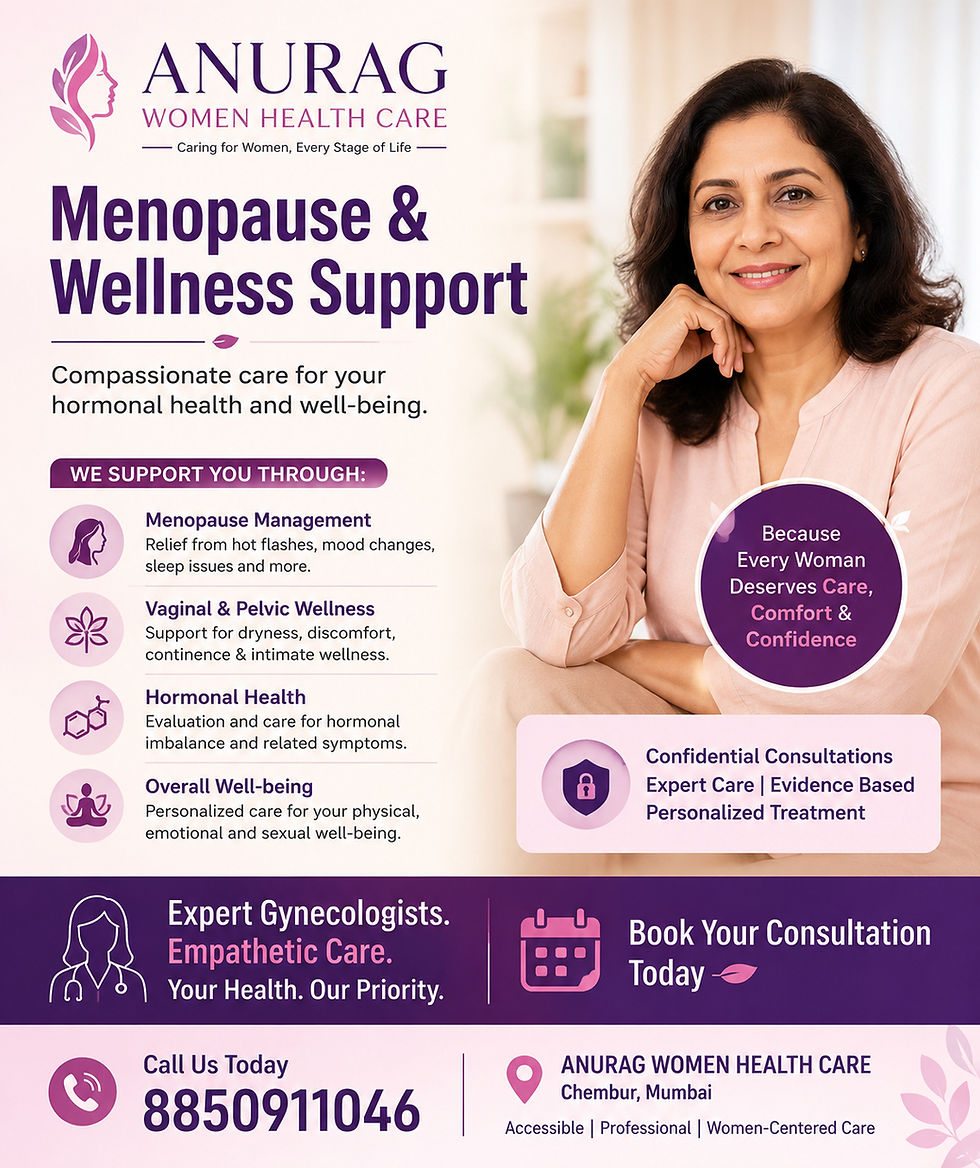
Anurag Women Health Care
Comprehensive Menopause & Women’s Wellness Support
Chembur, Mumbai
Also READ


Comments