

Cervical Cerclage: A Stitch in Time Saves Nine
Cervical Cerclage: A Stitch in Time Saves Nine
By Dr. Anuradha Narayanan
#CervicalCerclage #CervicalStitch #HighRiskPregnancy #PregnancyCare #PreventPretermBirth #CervicalInsufficiency
#MaternalHealth #HealthyPregnancy #Obstetrician #WomensHealth #PregnancyAwareness #SecondTrimester #PrenatalCare #PregnancySupport
#PregnancyEducation #AnuragWomenHealthCare #DrAnuradhaNarayanan #Chembur #MumbaiGynecologist #ObGyn #WomensWellness #SafeMotherhood
Pregnancy is a journey filled with joy, hope, and anticipation. While most pregnancies progress normally, some women have a condition where the cervix (the mouth of the uterus) starts to open too early, often without pain or contractions. This can lead to miscarriage or premature birth.
The good news? In many cases, a simple procedure called cervical cerclage can help protect your pregnancy.
As the old saying goes, “A stitch in time saves nine.” This perfectly describes cervical cerclage—a small stitch placed at the right time that can make a significant difference in helping your baby stay safely inside the womb until they are ready to be born.
What Is the Cervix?
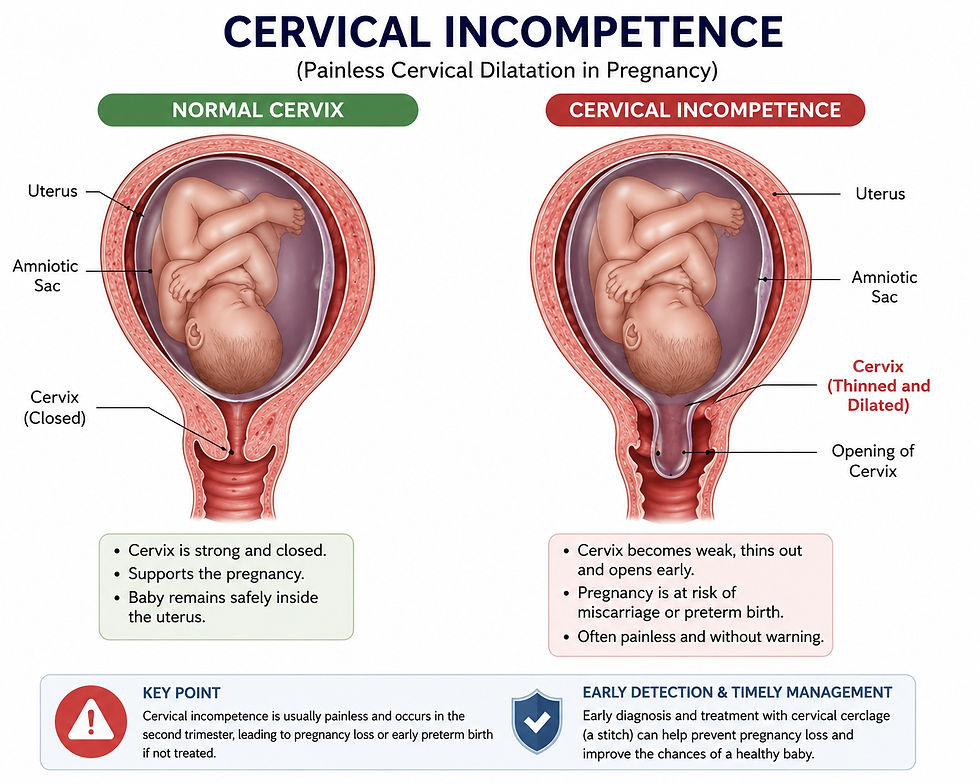
Think of your uterus as your baby’s home during pregnancy. The cervix is the strong door that keeps this home securely closed.
Normally, the cervix remains long, firm, and closed until the final weeks of pregnancy, when it gradually softens and opens for childbirth.
In some women, however, the cervix becomes weak and starts opening much earlier than it should. This condition is known as cervical insufficiency (incompetent cervix).
What Is Cervical Cerclage?
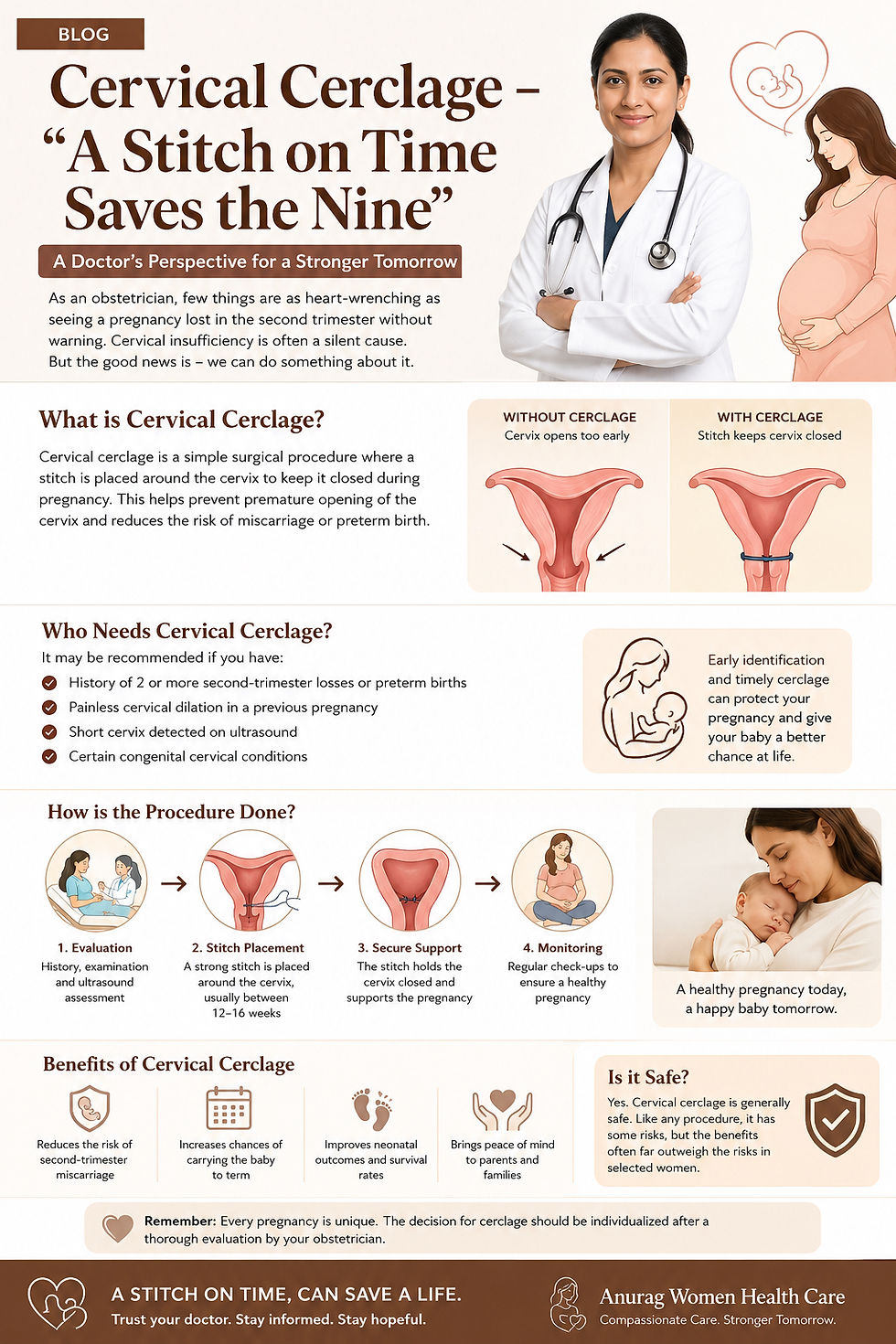
Cervical cerclage is a minor surgical procedure in which a strong stitch is placed around the cervix to keep it closed during pregnancy.
You can imagine it as tying a drawstring around the opening of a bag to keep everything safely inside.
The stitch is usually removed around 36–37 weeks of pregnancy, allowing labor to occur naturally. If a Caesarean section is planned before labor begins, your doctor may remove the stitch during surgery.
Who May Need a Cervical Cerclage?
Your doctor may recommend a cerclage if you have:
Two or more painless second-trimester pregnancy losses.
A previous premature birth caused by a weak cervix.
A very short cervix detected on ultrasound (usually less than 25 mm before 24 weeks).
Painless opening of the cervix during the current pregnancy.
Certain cervical surgeries in the past that may have weakened the cervix.
Not every woman with a short cervix needs a stitch. Sometimes progesterone treatment alone may be enough. Your obstetrician will recommend the best option based on your individual situation.
When Is the Stitch Placed?
The timing depends on why it is needed.
History-indicated cerclage: Usually between 12 and 14 weeks of pregnancy.
Ultrasound-indicated cerclage: Performed if the cervix shortens significantly before 24 weeks.
Emergency (Rescue) cerclage: Done when the cervix has already started opening but the membranes are still inside the uterus and there are no signs of labor or infection.
Earlier intervention generally provides the best chance of prolonging pregnancy.
How Is the Procedure Done?
The procedure usually takes 20 to 30 minutes.
Performed under spinal or short general anesthesia.
No cuts are made on the abdomen.
The stitch is placed through the vagina.
Most women go home the same day or after a short hospital stay.

Will It Hurt?
During the procedure, you will not feel pain because of the anesthesia.
Afterwards, you may experience:
Mild cramping
Light spotting
Slight discomfort for a day or two
These symptoms usually settle quickly.
What Happens After the Procedure?
Most women recover well.
Your doctor may advise:
A few days of reduced physical activity.
Avoiding sexual intercourse for a short period if recommended.
Continuing progesterone medication if prescribed.
Regular follow-up visits and ultrasound scans.
Strict bed rest is usually not necessary unless advised for other pregnancy complications.
Is Cervical Cerclage Safe?
Yes. Cervical cerclage has been performed safely for many decades and is considered an effective treatment for carefully selected women.
Like any medical procedure, it carries small risks, including:
Infection
Bleeding
Rupture of the membranes
Preterm labor
Rarely, injury to the cervix
Your doctor will discuss these risks and explain why the expected benefits outweigh them in your situation.
Does It Really Work?
For women with proven cervical insufficiency, cervical cerclage can significantly reduce the risk of pregnancy loss and early preterm birth.
Many mothers who previously experienced repeated second-trimester miscarriages have gone on to deliver healthy babies after receiving a timely cerclage.
The success of the procedure depends on several factors, including:
The reason for the cerclage.
How early it is performed.
Whether there is infection or active labor.
Careful follow-up throughout pregnancy.
When Should You Contact Your Doctor Immediately?
Seek medical attention if you experience:
Leakage of fluid from the vagina.
Heavy bleeding.
Fever or chills.
Severe abdominal pain.
Regular contractions.
Foul-smelling vaginal discharge.
Decreased fetal movements later in pregnancy.
Prompt evaluation can make an important difference.
Frequently Asked Questions
Can I walk after the procedure?
Yes. Most women can resume gentle daily activities within a day or two unless your doctor advises otherwise.
Can I travel?
Short-distance travel is often possible after recovery, but long journeys should be discussed with your obstetrician.
Will I need another cerclage in my next pregnancy?
Possibly. If cervical insufficiency caused problems in one pregnancy, your doctor may recommend a preventive cerclage in future pregnancies.
Can I have a normal delivery?
Yes. In most cases, the stitch is removed around 36–37 weeks, and many women go on to have a normal vaginal delivery.
A Message from Your Doctor
A cervical cerclage is much more than a stitch—it is a proactive step to give your pregnancy the best possible chance.
If you have experienced repeated miscarriages, premature birth, or have been told that your cervix is shortening, remember that modern obstetric care offers effective solutions. Early diagnosis, timely intervention, and regular follow-up can make all the difference.
As obstetricians often say, “A stitch in time truly saves nine.” One small stitch placed at the right moment may help protect the greatest gift of all—a healthy baby safely carried closer to full term.


Comments