

Exercise in pregnancy
Exercise in pregnancy
If you regularly exercised before you became pregnant, keep it up. Talk with your doctor about any adjustments you should make to your routine, especially as you move into your second and third trimesters.
•If you didn’t exercise regularly before you found out you were expecting, ask your doctor about incorporating a fitness routine into your day. They can guide you into a program that’s safe and comfortable for you and your growing baby.
Don’ts in exercise
DON’T over exert yourself listen to your body.
Women with the following conditions or pregnancy complications should not exercise during pregnancy:
•Certain types of heart and lung diseases
•Cerclage
•Being pregnant with twins or triplets (or more) with risk factors for preterm labor
•Placenta previa after 26 weeks of pregnancy
•Preterm labor during this pregnancy or ruptured membranes (your water has broken).
Benefits of exercise in pregnancy
Regular exercise during pregnancy benefits you and your fetus in these key ways:
•Reduces back pain
•Eases constipation
•May decrease your risk of gestational diabetes, preeclampsia, and cesarean birth
•Promotes healthy weight gain during pregnancy
•Improves your overall fitness and strengthens your heart and blood vessels
•Helps you to lose the baby weight after your baby is born.
How much exercise is normal in pregnancy
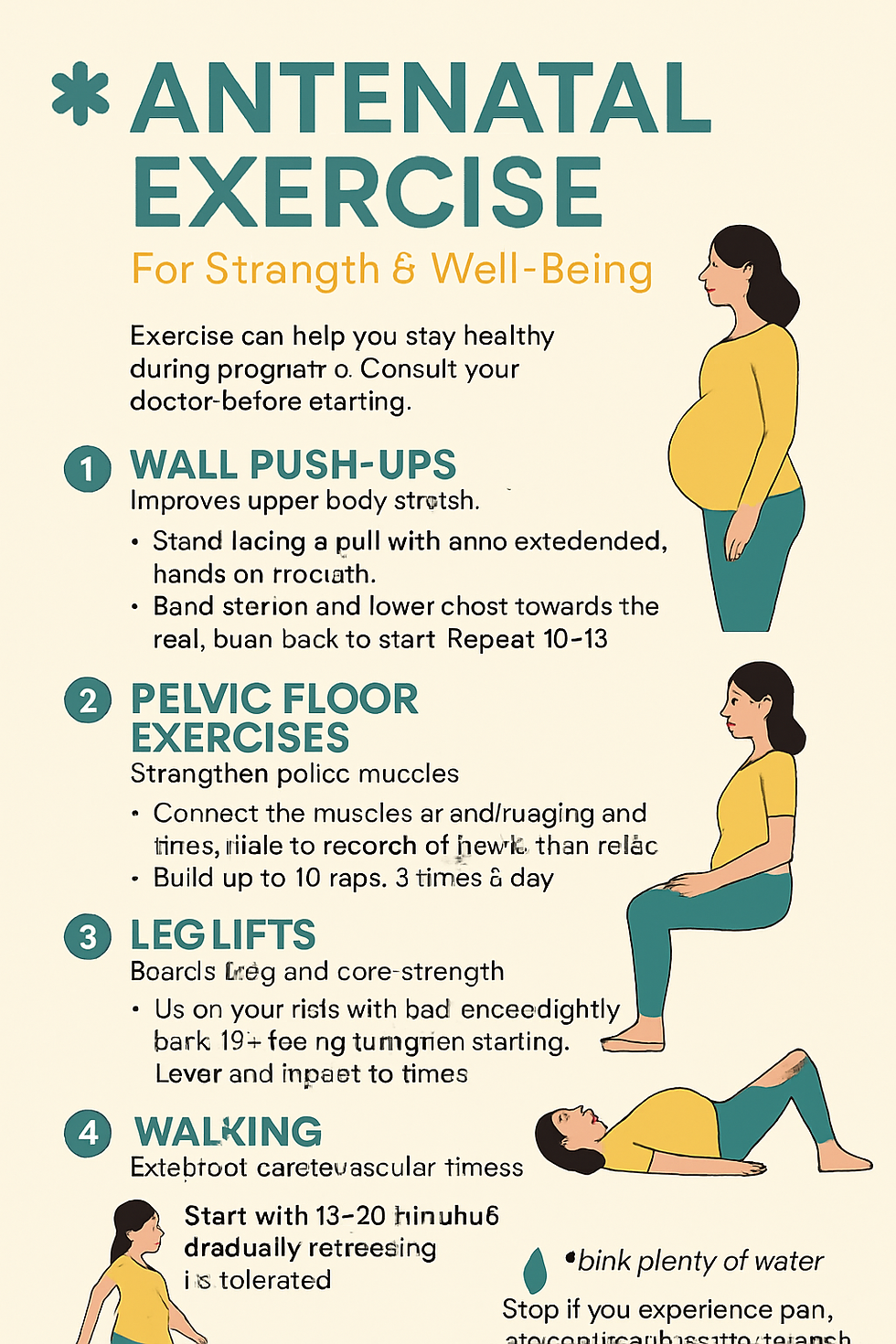
Ideally, pregnant women should get at least 150 minutes of moderate-intensity aerobic activity every week. An aerobic activity is one in which you move large muscles of the body (like those in the legs and arms) in a rhythmic way. Moderate intensity means you are moving enough to raise your heart rate and start sweating. You still can talk normally, but you cannot sing.
•Examples of moderate-intensity aerobic activity include brisk walking and general gardening (raking, weeding, or digging). You can divide the 150 minutes into 30-minute workouts on 5 days of the week or into smaller 10-minute workouts throughout each of the day.
Precautions during exercise
Drink plenty of water before, during, and after your workout. Signs of dehydration include dizziness, a racing or pounding heart, and urinating only small amounts or having urine that is dark yellow.
•Wear a sports bra that gives lots of support to help protect your breasts. Later in pregnancy, a belly support belt may reduce discomfort while walking or running.
•Avoid becoming overheated, especially in the first trimester. Drink plenty of water, wear loose-fitting clothing, and exercise in a temperature-controlled room. Do not exercise outside when it is very hot or humid.
Safe exercises in pregnancy
Experts agree these exercises are safest for pregnant women:
•Walking—Brisk walking gives a total body workout and is easy on the joints and muscles.
•Swimming and water workouts—Water workouts use many of the body’s muscles. The water supports your weight so you avoid injury and muscle strain.
•Stationary bicycling—Because your growing belly can affect your balance and make you more prone to falls, riding a standard bicycle during pregnancy can be risky. Cycling on a stationary bike is a better choice.
•Modified yoga and modified Pilates—Yoga reduces

Warning signs to stop exercise in pregnancy
Whether you’re a seasoned athlete or a beginner, watch for the following warning signs when you exercise. If you have any of them, stop and call your ob-gyn.
•Bleeding from the vagina
•Feeling dizzy or faint
•Shortness of breath before starting exercise
•Chest pain
•Headache
•Muscle weakness
•Calf pain or swelling
•Regular, painful contractions of the uterus
To know more call 8840911046, consult our expert.


Comments